Six surfaces the learner touches. One engine underneath.
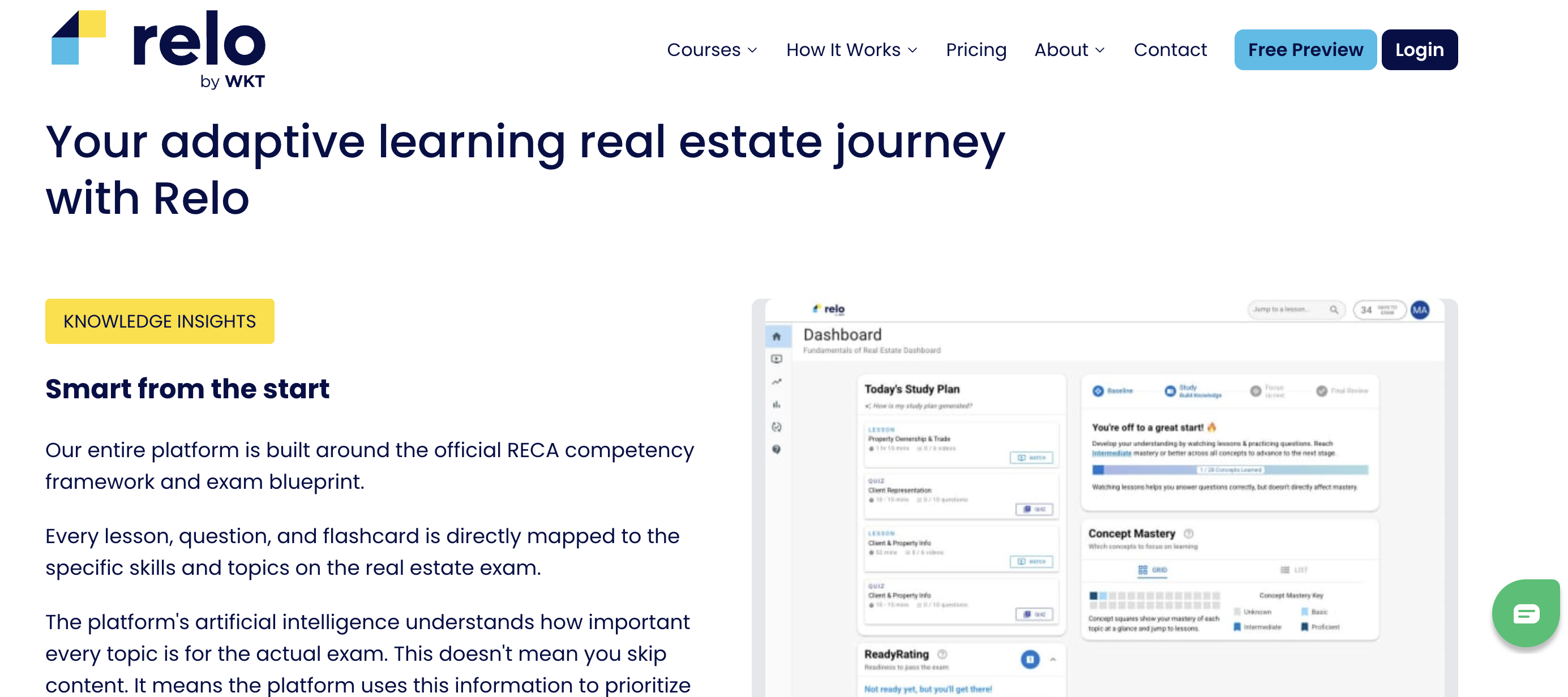
To the learner it’s an app: a daily study plan, practice questions that adjust to how they’re doing, flashcards, and a tutor that explains the why. To the instructor and the program it’s a dashboard. And at the centre sits one number, the ReadyRating™, that tells everyone the same thing in plain terms: how ready this person is to pass, today.
Not exam prep. Measurement-grade training.
A Red Seal exam blueprint is a psychometrically developed instrument, every competency weighted, validated, defensible. That rigour usually stops at the exam-room door. ReadyEngine™ carries it back into training: the blueprint becomes the training map, every answer updates a live model of what this worker has mastered, and the ReadyRating™ is calibrated against real exam outcomes. Tradespeople already know the principles in their bones: you get good at what you practise, you lose what you don’t, and you trust a gauge that’s been calibrated.
Learners practise pulling knowledge out, the way the exam and the job site demand it, not re-reading a binder. Every answer also tells the engine where they stand.
Material comes back just before it would fade. What’s learned stays learned, through exam day and onto the job.
The ReadyRating™ is checked against real exam results, like any calibrated instrument. When it says ready, there’s a track record behind it.
In a live, regulator-accredited real-estate licensing program (relo.ca). Corroborated by early CIRO securities results, and modelled forward to LLQP insurance.
Accepted by regulators. In regulated programs, ReadyEngine™ thresholds are recognized as meeting training requirements and accredited competency standards — readiness as an approved measure, not just an internal score. The speed to be ready to write the exam changes everything for a cohort.
Four regulated domains. Zero algorithm changes.
Built for professional accounting exam prep (ExamPrep.ai), then carried unchanged into real-estate licensing (Relo.ca, Dec 2025), banking & securities (Business Career College), and now LLQP life insurance. Each new credential comes online by mapping its blueprint into the knowledge structure, not by rebuilding the platform. The skilled trades are the next mapping, not the next rebuild. The trades outcome itself is a target we intend to prove, not a result we claim.
Deployed, not conceptual. The engine runs live today under our own regulated brands, with paying learners, the public storefront at relo.ca and the ReadyEngine™ study plan behind it.

The pipeline isn’t short of people. It’s short of proof.
Canada is filling the pipeline, a record 101,541 new apprenticeship registrations last year. But registrations are the entrance. At the exit, the certification exam, the national pass rate sits near 54%, and 30.9% of apprentices discontinue before they ever reach it. The failure is at the exit, not the entrance.
The national commitment exists. The missing layer is a common readiness instrument.
Team Canada Strong invests $8 billion across recruitment, training, completion, certification and hiring, toward 80,000–100,000 new Red Seal workers by 2030–31. Red Seal modernization improves the infrastructure surrounding the journey. What remains difficult to see is the status of each person inside it: who is ready now, who is close, what competency remains and whether a training intervention closed the gap.
Five levers toward 80,000–100,000 certified workers by 2030–31.
The exam gap is the layer we can already price. The next four stack on top of it. 14,000 is the floor of the ambition, not the ceiling.
One engine. Four ways into the hands that need it.
Make ReadyEngine available as a supplementary readiness and technical-learning instrument for participating apprentices.
Support first-year apprentices, up-ticketing and cross-ticketing through eligible employers and delivery partners, subject to final program rules.
Pursue pilots through eligible institutions, associations and technology partnerships within the new bilateral training arrangements.
Serve experienced workers and exam challengers who are not reached through funded institutional programs.
Flexible online delivery can supplement constrained classroom capacity, support apprentices between formal training periods and give unsupported workers another route toward the standard. It does not replace mandatory technical training, institutional instruction or apprenticeship requirements.
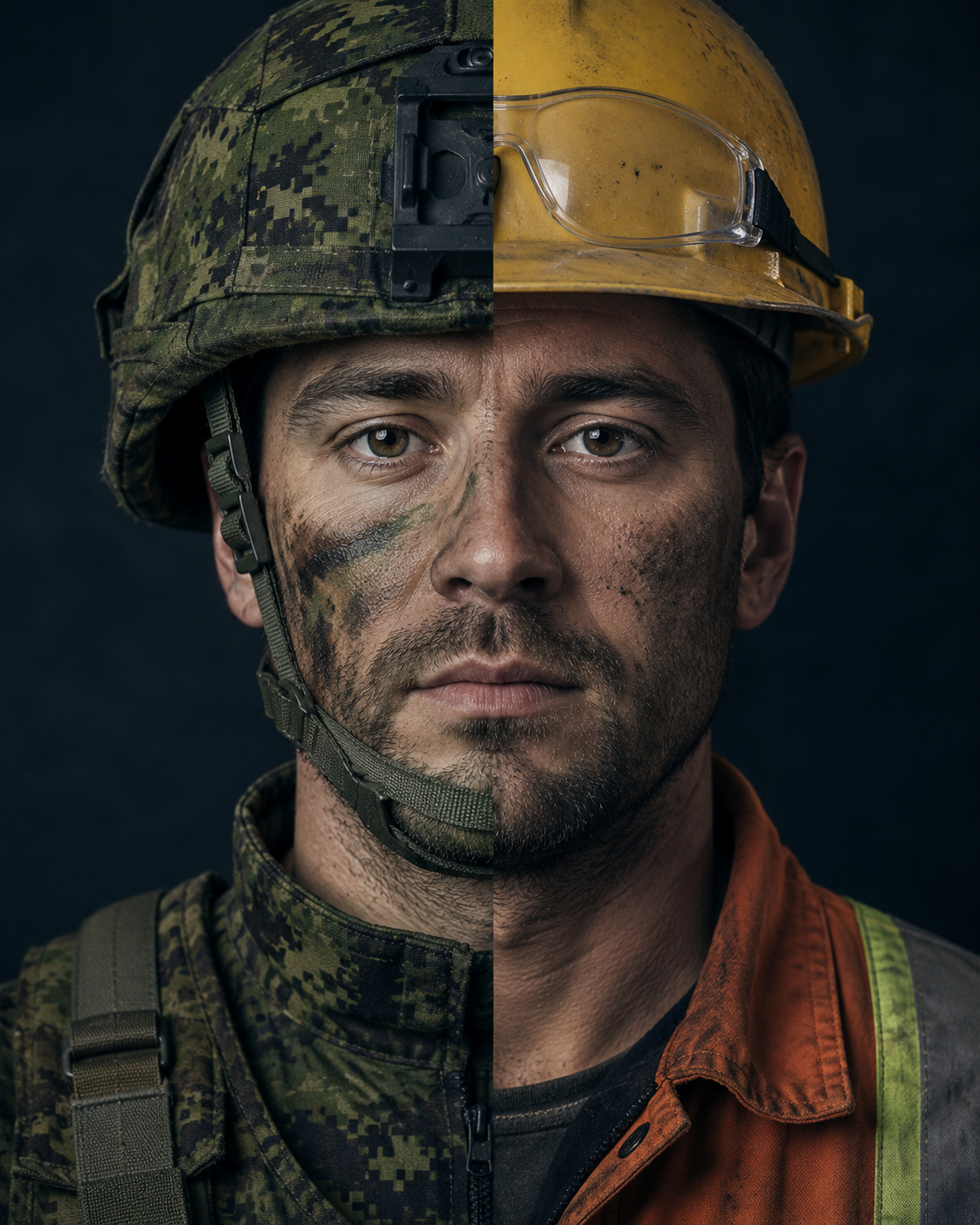
One worker. Two uniforms.
Canadian Armed Forces members train and work in trades that map directly onto civilian Red Seal trades, and too much of that competence is lost at the uniform line. The same engine that measures a civilian apprentice can benchmark a serving member or veteran against the civilian standard: an evidence-based bridge from military qualification to a civilian ticket.
Recruiting improves too: a trade you can carry out is a trade worth joining for. Dual-use by design.
Discovery works better when the worker knows what they are missing.
Of the five impact drivers we model for the trades, four are about people already inside the system. The fifth is the top of the funnel: a free national portal where any Canadian can find out how close they are to a trade. That is not a feature beside Job Bank. It is a feature of it. Employers directed to the Finder under the Workforce Retention and Retraining Program face the same problem from the other side — they know they must spend training money, but not always on what.
The workers are out there. The engine finds them, readies them, and proves it. The rest is will.